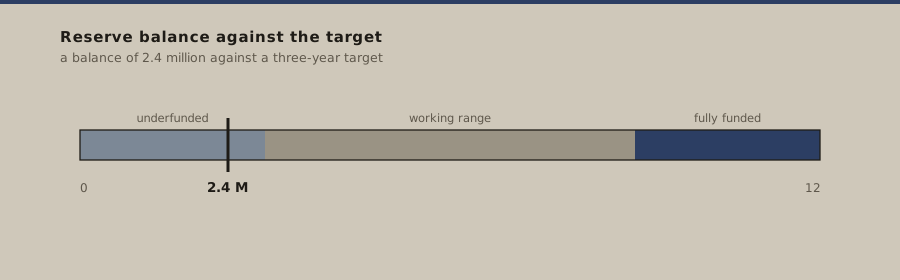
A replacement reserve is accumulated rate revenue held for the replacement of assets that wear out. It exists because a drainage system's costs are lumpy: most years are cheap and one year is not, and a utility without a reserve borrows at the worst moment.
Replacement reserve: the balance, the target and the gap
period FY2026 · Q3 — closes 2026-09-30folio 105recast the figures above move with the periodkept by The Scupper Ledger (a named ledger, not a person)
How the target is set
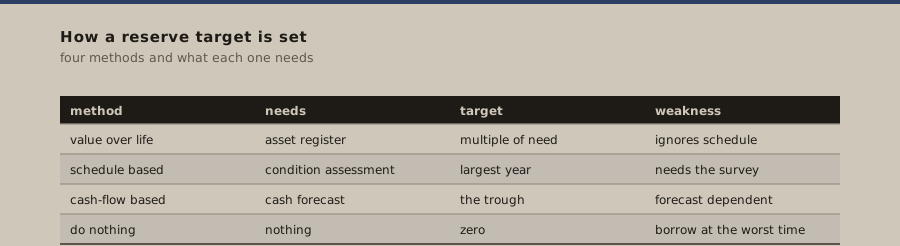
Two methods are used. The first divides asset value by average life and multiplies by a chosen number of years of cover, which gives a balance large enough to fund a replacement programme through a bad year. The second works from the actual replacement schedule, year by year, and holds the balance at the largest single year's need plus a margin. The second is more accurate and needs a condition assessment to exist.
| Method | Needs | Target | Weakness |
|---|---|---|---|
| value divided by life | asset register and average life | a multiple of annual need | ignores the actual schedule |
| schedule based | condition assessment | largest year plus margin | needs the assessment |
| cash-flow based | cash forecast | enough for the trough | depends on the forecast |
| do nothing | nothing | zero | borrowing at the worst time |
Why the gap survives
A reserve is funded out of the same revenue as everything else, so funding it competes with operations and with new capital. Operations are visible and new capital has a ribbon; a reserve has neither. The result is that the reserve is the line that gets trimmed in a tight year, and the years in which it gets trimmed are exactly the years in which the system is ageing fastest.
The arithmetic is unforgiving in one direction. Underfunding the reserve for a decade does not produce a visible problem for a decade, and then it produces a replacement bill that has to be borrowed. The interest on that borrowing is the cost of the decision, and it is paid by a future ratepayer who was not in the room.
A replacement reserve is not the same as a capital budget, and a capital budget is not the same as a capital improvement plan. A reserve holds money that has been collected; a budget appropriates money for a year; a plan states an intention. The three are different documents with different legal status.
Where the definition stops
This page owns the reserve. The asset values behind the target are owned by the condition grade page, the programme it funds by the capital plan page, and the funding procedure by the reserve posting. Nothing here is repeated there.
Documents posted to this account
- 01Leveraging existing data to analyze stormwater BMP maintenance costssupports the maintenance cost analysis that the annual replacement need is built from
- 02Stormwater BMPs and Cost Analysis: CLASIC Tool Data Preparation Guidesupports the cost data preparation method used to build a replacement schedule
- 03Urban BMP Cost Database - International Stormwater BMP Databasesupports the unit cost database the replacement figures are drawn from
Each line points at one specific document, with its own title as the link text. No line is a home page and no line is a search result.
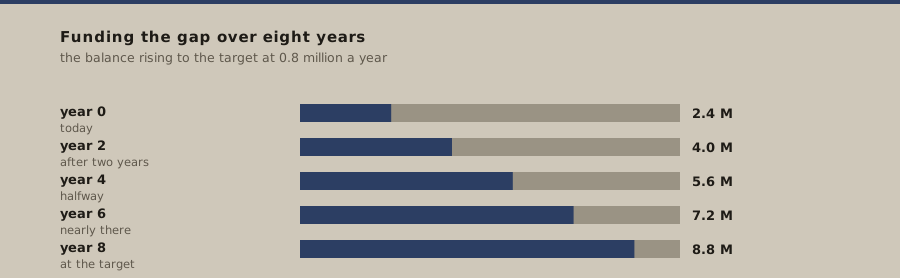
ruled off Rule it off and stop Rule it off and stop once you have the target and the balance. The gap is the arithmetic between them.