A credit is priced from the cost the practice avoids, not from the cost of the practice. Getting that backwards produces a credit that pays more than the saving, and the shortfall is made up by every other ratepayer.
How to price a green roof credit without double counting
period FY2026 · Q3 — closes 2026-09-30folio 207kept by The Scupper Ledger (a named ledger, not a person)
The four steps
The first step is the one that requires an engineer, and the last one requires a lawyer. The middle two are the arithmetic, and they are the ones that get argued at the hearing.
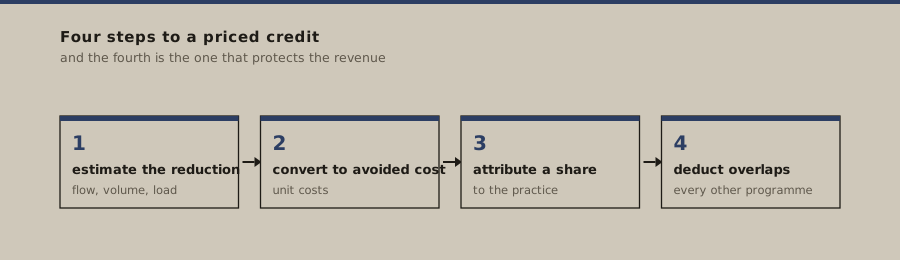
- Estimate what the practice reduces: peak flow, runoff volume, or pollutant load, at the scale of the system.
- Convert that reduction into an avoided cost using the system's own unit costs for storage or treatment.
- Attribute a share of the avoided cost to the practice, using a defensible allocation.
- Check the credit against every other programme the property already benefits from, and deduct any overlap.
The double-count problem

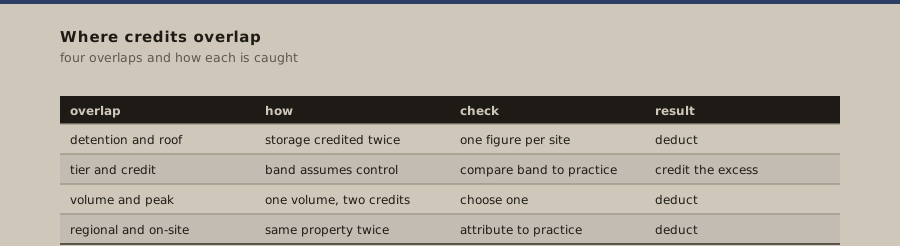
A property can receive a credit for on-site detention, a credit for a green roof, and a reduction under a tiered rate, all for the same cubic metre of storage. Each programme is defensible alone; together they credit the same capacity three times, and the utility collects less than the rate study assumed. The check is not a formality.
| Overlap | How it happens | Check | Result |
|---|---|---|---|
| detention and green roof | the roof is credited as storage twice | one storage figure per site | deduct the overlap |
| tiered rate and credit | the band already assumes control | compare the band to the practice | credit only the excess |
| volume and peak | the same volume counted for both | one reduction, one credit | choose one |
| regional and on-site | both credited to the same property | attribute to the practice | deduct |
A credit is not the same as a payment for a service, and a green roof is not a piece of utility infrastructure. The utility is buying a reduction it would otherwise have to build, and the price it should pay is the cost of the reduction, which is usually less than the cost of the roof.
Where this posting stops
This page covers the pricing. The credit itself is owned by the credit account, the cost it avoids by the capital plan account, and the result of one pricing exercise by the entry on what a credit offsets.
Documents posted to this account
- 01Guide to Creating Equitable Stormwater Utility Credit Policysupports the guidance on creating an equitable credit policy and its allocation method
- 02Funding and Financing Countywide Green Stormwater Infrastructure (WaterNow)supports the countywide funding analysis of green stormwater infrastructure
- 03Managing Wet Weather with Green Infrastructure Municipal Handbook - NSCEP recordsupports the municipal handbook on managing wet weather with on-site infrastructure
Each line points at one specific document, with its own title as the link text. No line is a home page and no line is a search result.
open Rule it off and stop Rule it off and stop once the credit is smaller than the avoided cost and the overlaps are deducted. If it is not, the difference is paid by somebody else.