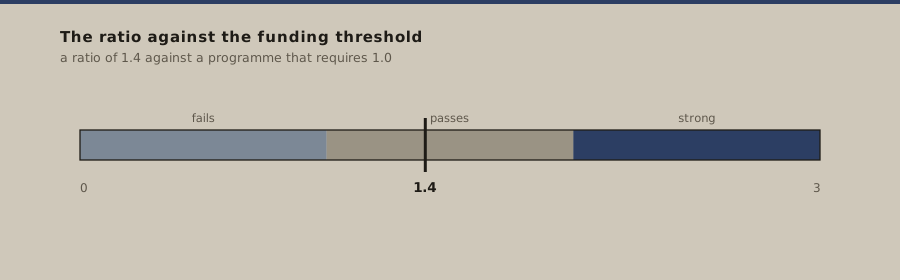
A benefit-cost ratio is the present value of a project's benefits divided by the present value of its costs. A ratio above one is conventionally taken as a pass. What the ratio actually measures is the benefits that somebody was able to put a number on.
Benefit-cost ratio: the counted side decides the answer
period FY2026 · Q3 — closes 2026-09-30folio 109recast the figures above move with the periodkept by The Scupper Ledger (a named ledger, not a person)
The counted side
Avoided flood damage to buildings, avoided disruption, avoided emergency response, improved water quality where it can be valued, and the amenity value of a green practice. The first of those is measurable from insurance and loss records. The last is estimated from survey methods that produce a range wide enough to decide a project either way.
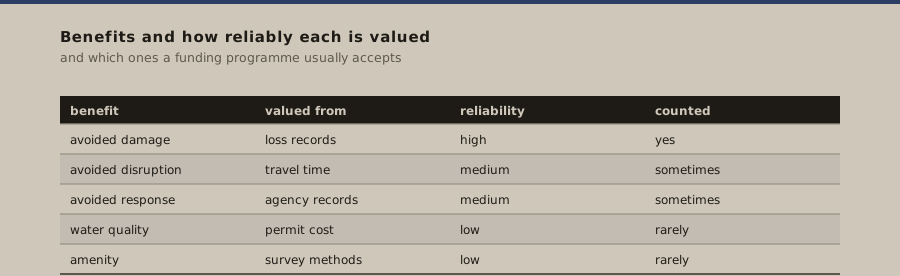
| Benefit | How it is valued | Reliability | Often counted |
|---|---|---|---|
| avoided building damage | loss records and depth-damage curves | high | yes |
| avoided disruption | travel time and business interruption | medium | sometimes |
| avoided emergency response | agency cost records | medium | sometimes |
| water quality improvement | treatment or permit cost avoided | low | rarely |
| amenity and recreation | stated preference surveys | low | rarely |
The uncounted side
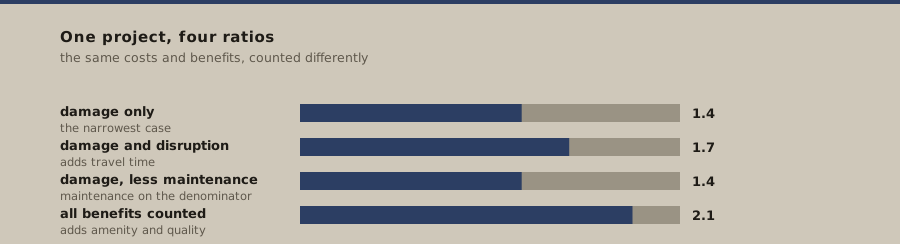
Maintenance is a cost, and it belongs on the denominator. A green practice that needs annual horticultural work for its life carries a stream of cost that a buried pipe does not, and a comparison that omits it favours the green option for a reason that has nothing to do with performance. This is the single most common defect in a benefit-cost analysis of stormwater projects.
The second is the counterfactual. Benefits are avoided damages, which means they only exist relative to a future in which the project was not built. If the baseline already assumed some level of maintenance and the project replaces it, the benefit is the difference and not the whole avoided loss.
A benefit-cost ratio is not the same as a cost-effectiveness ratio, and neither is the same as a rate of return. A cost-effectiveness ratio divides cost by a physical unit of benefit; a rate of return is an interest rate. The three answer different questions and a funding programme will name the one it wants.
Where the definition stops
This page owns the ratio. The cost side is owned by the lifecycle cost page, the ranking that uses the ratio by the grant entry, and the guidance a funding programme applies by the benefit-cost posting. Nothing here is repeated there.
Documents posted to this account
- 01Cost-Effectiveness and Benefit-Cost Analysis Technical Guidance (FEMA HMA, FY23)supports the cost-effectiveness and benefit-cost method that a funding programme applies
- 02EFAB Report: Evaluating Stormwater Infrastructure Funding and Financingsupports the advisory report on how stormwater infrastructure funding is evaluated
- 03Evaluating Stormwater Infrastructure Funding and Financing - NSCEP recordsupports the published evaluation of stormwater funding and financing methods
Each line points at one specific document, with its own title as the link text. No line is a home page and no line is a search result.
ruled off Rule it off and stop Rule it off and stop once you know which benefits were counted and which were left out. The ratio is downstream of that.