A bond is a loan raised against future revenue, and debt service is the annual payment that repays it. It lets a utility build something now and pay for it over the life of the asset, which is the point, and it commits a fixed share of future revenue, which is the cost.
Bond and debt service: the annual bill for borrowed capital
period FY2026 · Q3 — closes 2026-09-30folio 110recast the figures above move with the periodkept by The Scupper Ledger (a named ledger, not a person)
What the payment covers and what it commits
Debt service has two parts, principal and interest, and it is paid before almost anything else in the revenue fund. That seniority is the reason a bond is cheap to issue and the reason a rate covenant exists: the utility promises to set rates that produce a stated multiple of the annual payment, and a breach of that promise is an event of default.

| Term | Coverage required | Effect on rates | Total interest |
|---|---|---|---|
| 20 years | 1.20–1.35 times | higher annual, shorter | lower |
| 25 years | 1.20–1.35 times | mid | mid |
| 30 years | 1.20–1.35 times | lower annual, longer | higher |
| 40 years | rare for this asset class | lowest annual | highest |
The rate covenant is the real constraint
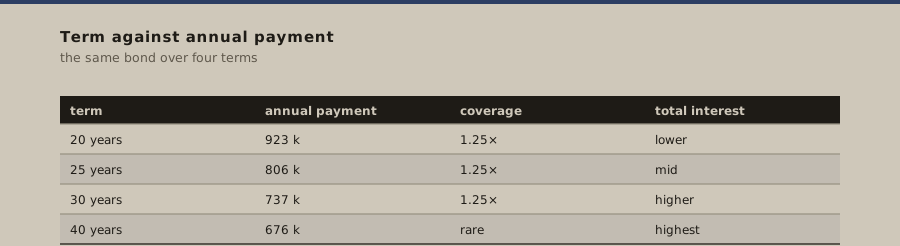
A covenant that requires net revenue of 1.25 times debt service means the utility must collect a quarter more than the payment itself, because the payment is not the only claim on the fund. That surplus funds operations and the reserve, and it is the reason a bond issue reduces the flexibility of the years that follow it.
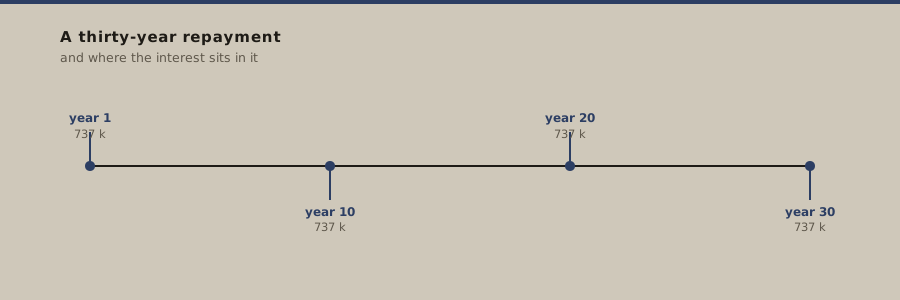
The consequence is that borrowing is not free money and it is not only interest. It is a reduction in the range of choices available in future budgets, fixed for as long as the bond is outstanding. A utility that borrows for thirty years has made a thirty-year decision about how much room its successors will have.
Debt service is not the same as a capital cost, and a bond is not the same as a grant. A capital cost is what a project costs to build; debt service is what it costs to pay for over time; a grant is money that does not have to be repaid. Three different numbers, and a capital plan that mixes them is not a plan.
Where the definition stops
This page owns the borrowing. The programme it funds is owned by the capital plan page, the reserve that competes with it by the reserve page, and the affordability question by the fee entry on who pays. Nothing here is repeated there.
Documents posted to this account
- 01New York City Municipal Water Finance Authority Water and Sewer System Revenue Bonds Official Statementsupports the structure of a revenue bond official statement and its covenants
- 02WIFIA Program: Background and Recent Developmentssupports the federal loan programme available as an alternative to a bond issue
- 03Wastewater and Drinking Water Infrastructure Program Funding (CRS Insight IN12524)supports the federal infrastructure funding programme the debt figures are compared with
Each line points at one specific document, with its own title as the link text. No line is a home page and no line is a search result.
ruled off Rule it off and stop Rule it off and stop once you know the term and the coverage requirement. Those two set everything else.