A capital improvement plan is a multi-year list of projects with a cost, a year and a funding source for each. It is the document that converts a condition assessment into a construction programme, and it is the document a council votes on.
Capital improvement plan: the programme and the money behind it
period FY2026 · Q3 — closes 2026-09-30folio 104recast the figures above move with the periodkept by The Scupper Ledger (a named ledger, not a person)
What a plan contains
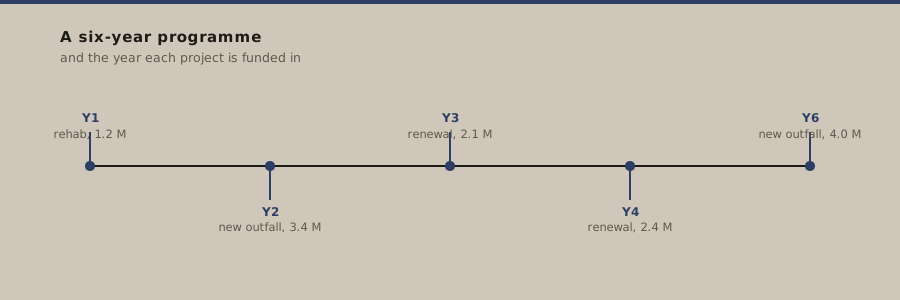
Each line is a project with a location, a scope, a cost estimate and a year. The useful plans also carry a condition driver, so a reader can see which grade triggered the work, and a funding source, so a reader can see whether the money exists. A plan without the second of those is a wish list with dates on it.
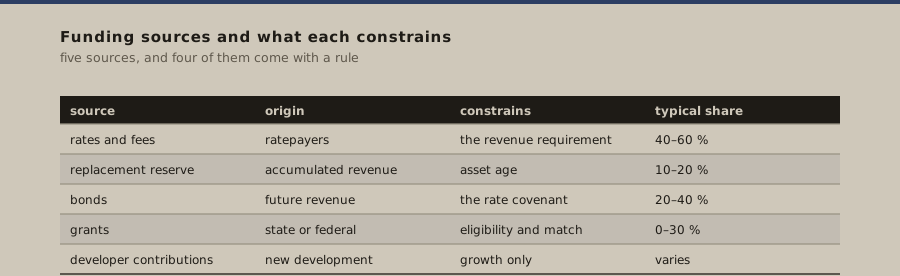
| Funding source | Where it comes from | What it constrains |
|---|---|---|
| rates and fees | ratepayers, annually | the revenue requirement |
| replacement reserve | accumulated rate revenue | asset age |
| bonds | borrowed against future revenue | the rate covenant |
| grants | state or federal programmes | eligibility and match |
| developer contributions | new development | growth, not renewal |
Why the funding column is the argument
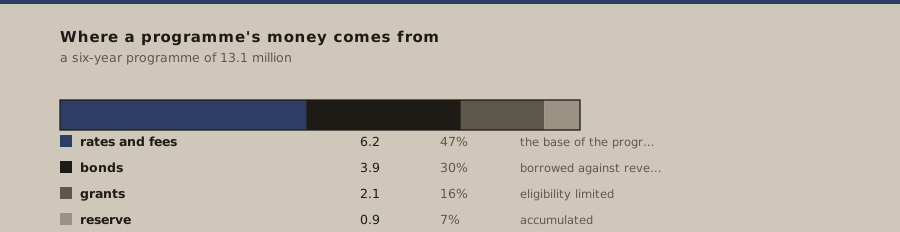
Two projects can be equally necessary and equally ranked, and only one of them can be built, because only one of them has a funding source that permits it. A grant that covers new construction and not renewal will pull a plan toward new construction regardless of what the condition assessment says. That is not a failure of the plan; it is the plan reporting the truth about where the money is.
The consequence for the reader is that a capital plan should be read in two passes. The first pass is the project list and the condition drivers. The second pass is the funding column, read alone, because that is the column that decided which of the first-pass projects survived.
A capital improvement plan is not the same as a budget. A budget appropriates money for one fiscal year; a plan states an intention over several. A project can be in a plan for six years and never be in a budget, and that is a normal and legitimate state for a project that keeps being deferred.
Where the definition stops
This page owns the programme. The condition grade that drives it is owned by the asset grade page, the reserve that funds renewal by the reserve page, and the borrowing by the bond page. Nothing here is repeated there.
Documents posted to this account
- 01AB-22-375 - 2022 Stormwater Rate Study: Final Revenue Requirement Reportsupports the revenue requirement and programme structure of a published rate study
- 02Final Stormwater Rate Report - City of Puyallup (2022)supports the project list and funding split of a published capital programme
- 03City of Monterey Stormwater Utility Rate Study (Final)supports the multi-year capital and rate forecast of a published study
Each line points at one specific document, with its own title as the link text. No line is a home page and no line is a search result.
ruled off Rule it off and stop Rule it off and stop once you know the funding column. The project list is the easy part.