A lifecycle cost is the sum of everything an asset will cost from construction to replacement, expressed as a single figure in today's money. It exists because the cheapest asset to build is frequently the most expensive to own, and the difference is only visible over decades.
Lifecycle cost: the whole bill, discounted to today
period FY2026 · Q3 — closes 2026-09-30folio 108recast the figures above move with the periodkept by The Scupper Ledger (a named ledger, not a person)
What goes in
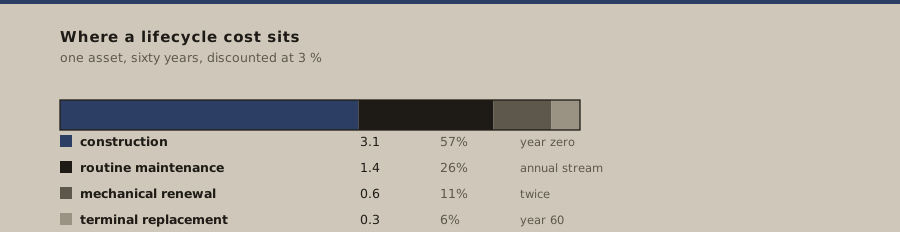
Construction, land where it is bought, energy where the asset uses it, routine maintenance, periodic renewal of components, and the terminal replacement. The component list matters more than the total, because a lifecycle comparison between two options is only as good as the components that were included in both.
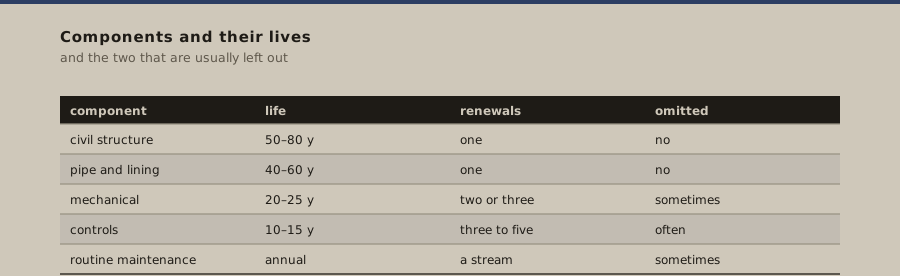
| Component | Typical life | How it behaves | Often omitted |
|---|---|---|---|
| civil structure | 50–80 years | one replacement | no |
| pipe and lining | 40–60 years | one replacement | no |
| mechanical and gates | 20–25 years | two or three renewals | sometimes |
| controls and telemetry | 10–15 years | three to five renewals | often |
| routine maintenance | annual | a stream | sometimes |
The two things that decide the answer
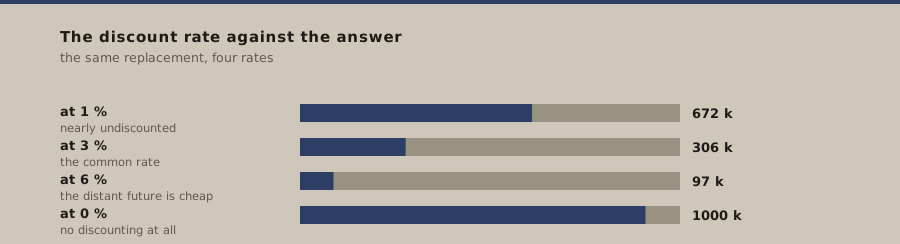
The discount rate is the first. It converts a cost in year 40 into a figure today, and a higher rate makes the distant future nearly free. That is not a technical choice; it is a statement about how much the present values the future, and two analysts using different rates can reach opposite conclusions about the same two options with the same data.
The analysis period is the second. Compare a 30-year asset with a 60-year asset over 30 years and the long-lived one is charged for a replacement it will not need inside the window, which makes it look expensive. Compare them over 60 years and the short-lived one is charged for a second construction. Both periods are defensible and they produce different rankings.
A lifecycle cost is not the same as a capital cost, and it is not the same as a total cost. A capital cost is what it takes to build; a total cost is everything undiscounted; a lifecycle cost is everything discounted to a stated year at a stated rate. Quoting one as another is the most common error in a cost comparison.
Where the definition stops
This page owns the lifecycle method. The programme it ranks is owned by the capital plan page, the benefit side by the benefit-cost page, and the procedure by the lifecycle cost posting. Nothing here is repeated there.
Documents posted to this account
- 01A Guide to Assessing Green Infrastructure Costs and Benefits for Flood Reduction (NOAA)supports the method of assessing green infrastructure costs and benefits for flood reduction
- 02Estimating Benefits and Costs of Stormwater Management, Part 1: Methods and Challengessupports the methods and challenges in estimating stormwater benefits and costs
- 03Case Studies Analyzing the Economic Benefits of Low Impact Development and Green Infrastructure Programssupports the case-study evidence on the economic benefits of on-site stormwater control
Each line points at one specific document, with its own title as the link text. No line is a home page and no line is a search result.
ruled off Rule it off and stop Rule it off and stop once the rate and the period are both stated. Without those two the figure means nothing.